The Pied Piper of Hamelin
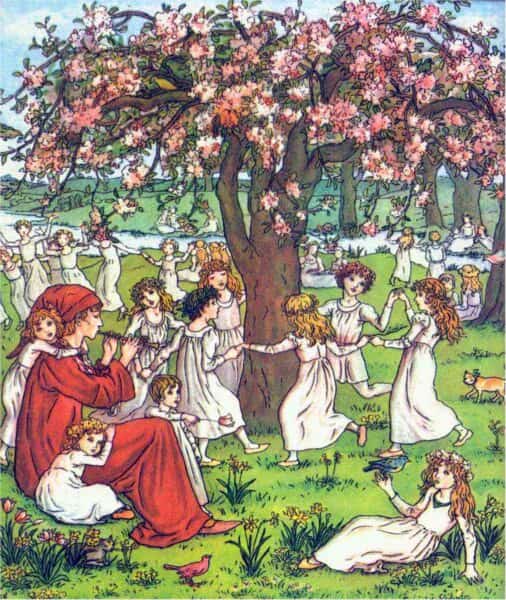
The famous story of the greatest rat-charmer of all time. Verse by Robert Browning. The reading comes with the beautiful illustrations of Kate Greenaway (1846 – 1901).
Fact Box: The Pied Piper of Hamelin
- Poem by: Robert Browning (1812–1889), Victorian poet famed for dramatic monologues such as My Last Duchess.
- Illustrations by: Kate Greenaway (1846–1901), celebrated English illustrator of graceful childhood scenes.
- Origin An entry in Hamelin’s town records, dating to 1384, laments that, “It is 100 years since our children left.”
- The Lüneburg manuscript is a 15th-century German manuscript containing one of the earliest written accounts of the Pied Piper of Hamelin legend. It states that a piper led 130 children away from the town of Hamelin on June 26,1284. It does not mention rats.
- Prose version: The Brothers Grimm told the story in prose as Der Rattenfänger von Hameln.
- Setting: Hamelin (Hameln), Lower Saxony, Germany. On Hamelin’s “street without drums” (Bungelosenstraße), playing music is traditionally forbidden.

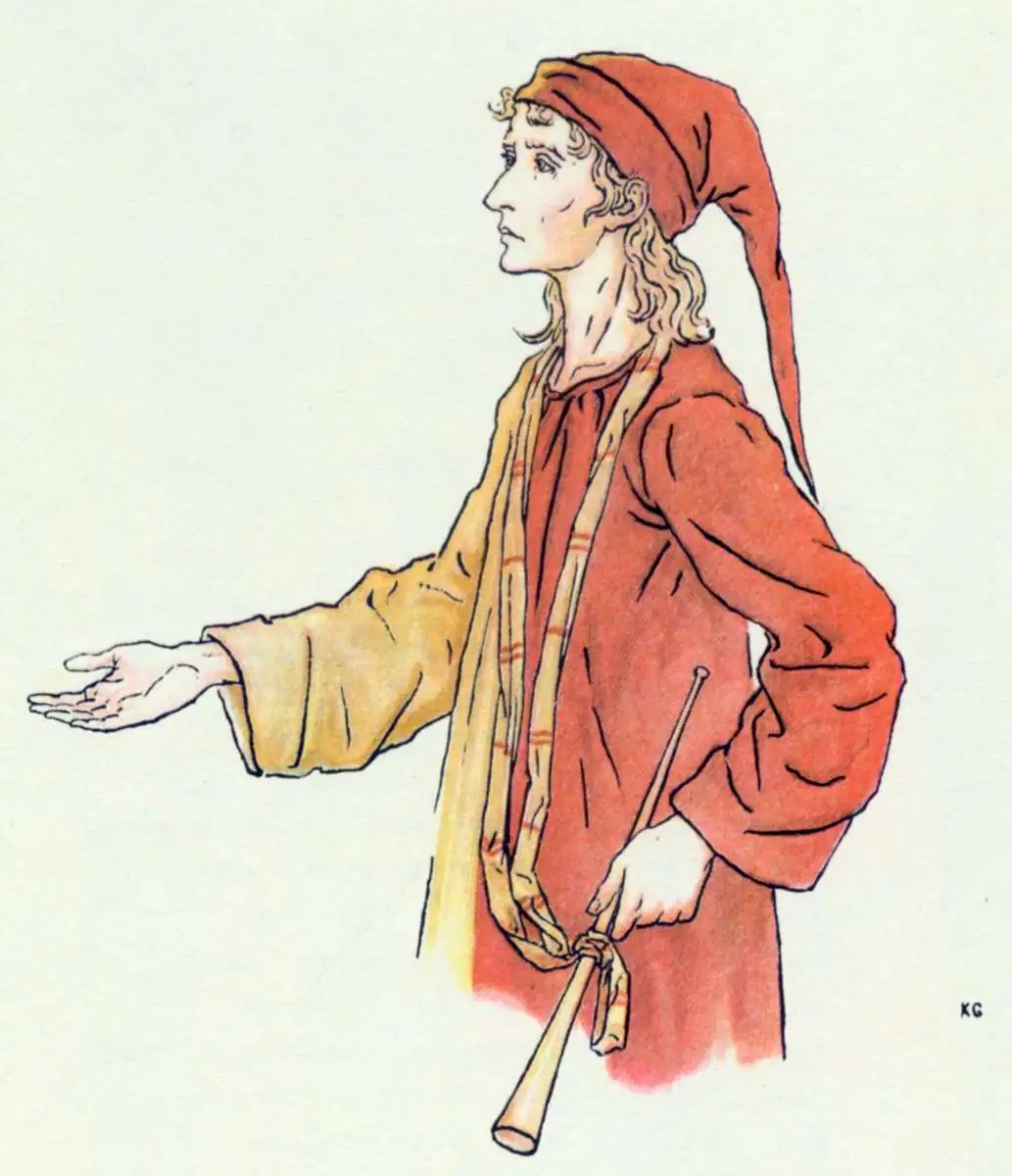
- Meaning of “Pied”: The word “pied” means multicoloured or patchwork, from “magpie” — a reference to the Piper’s bright red and yellow coat.
- Theme: Broken promises, greed, and the strange power of music and magic.
- Rat Catcher’s Day: Hamelin marks 26 June each year to commemorate the story.
Hamelin Town’s in Brunswick, By famous Hanover city; The river Weser, deep and wide, Washes its wall on the southern side; A pleasanter spot you never spied; But, when begins my ditty, Almost five hundred years ago, To see the townsfolk suffer so From vermin, was a pity.
II.
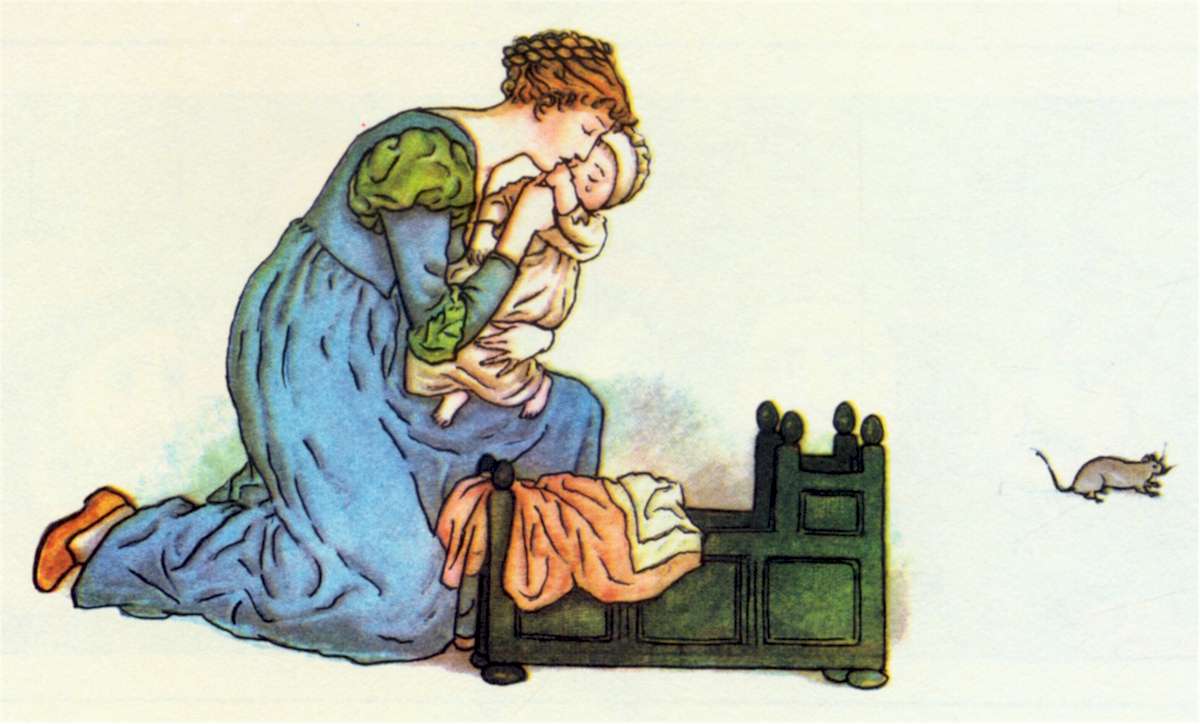
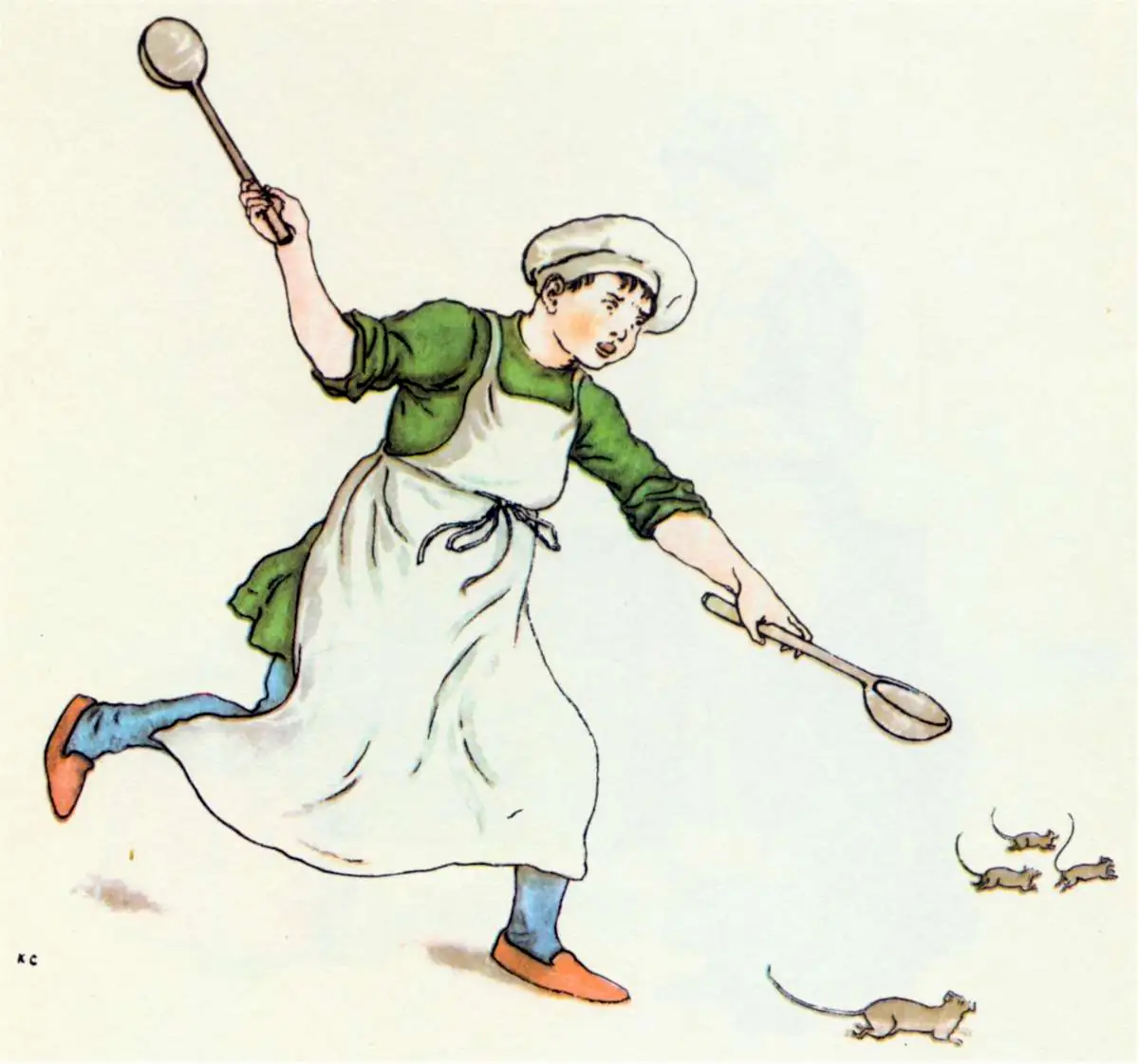
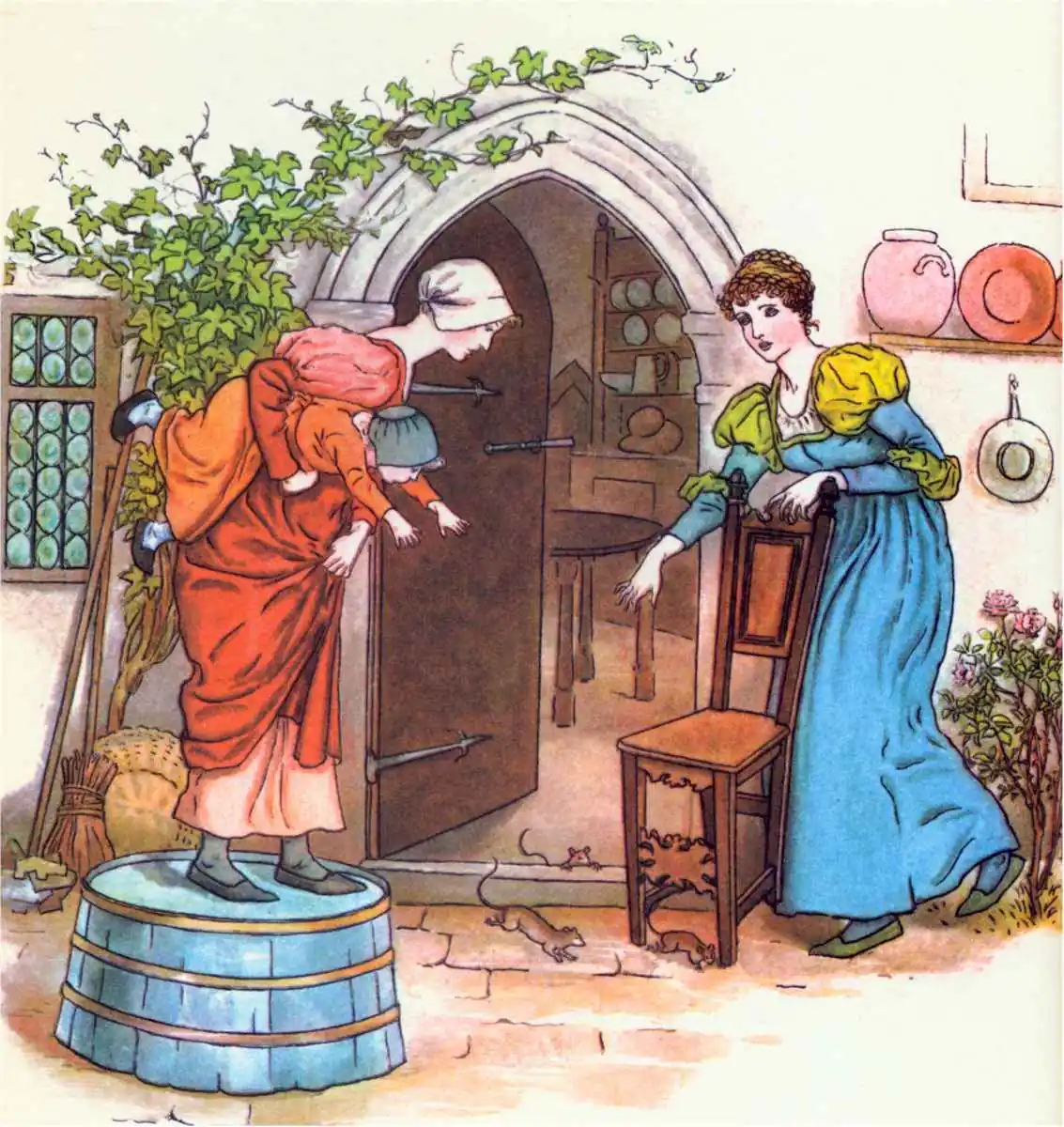
Rats! They fought the dogs and killed the cats, And bit the babies in the cradles, And ate the cheeses out of the vats.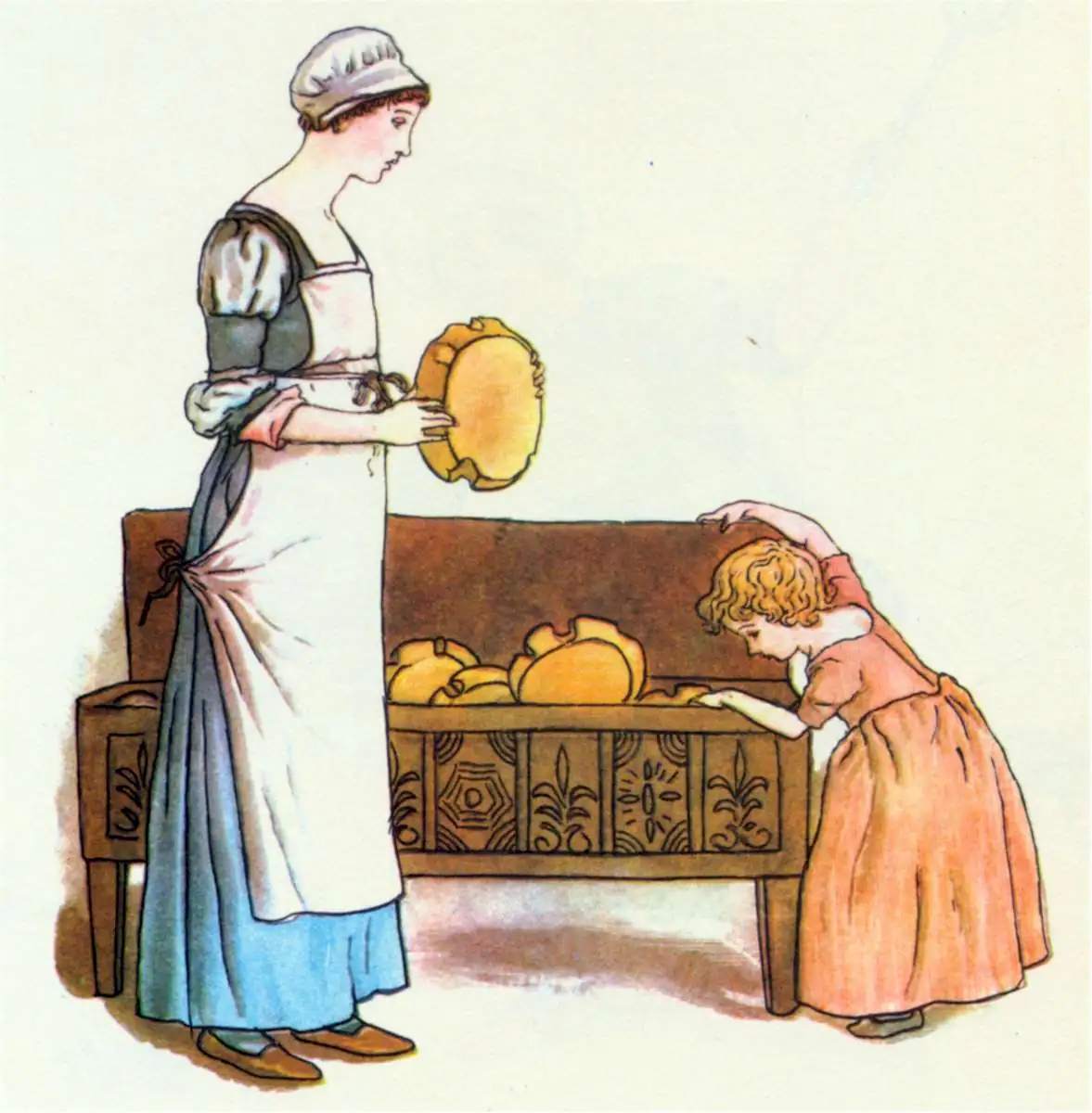
III.
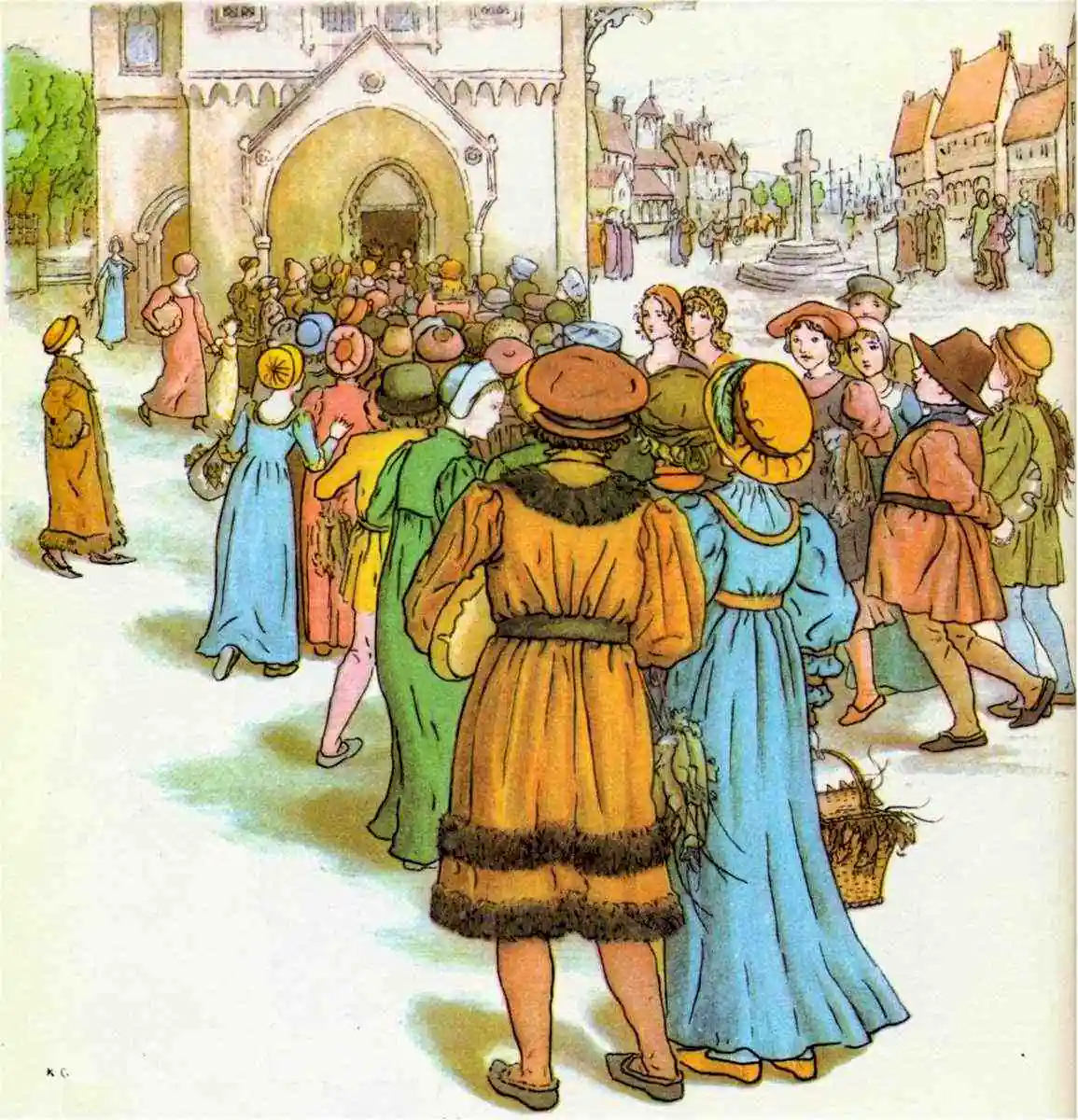
At last the people in a body To the Town Hall came flocking: 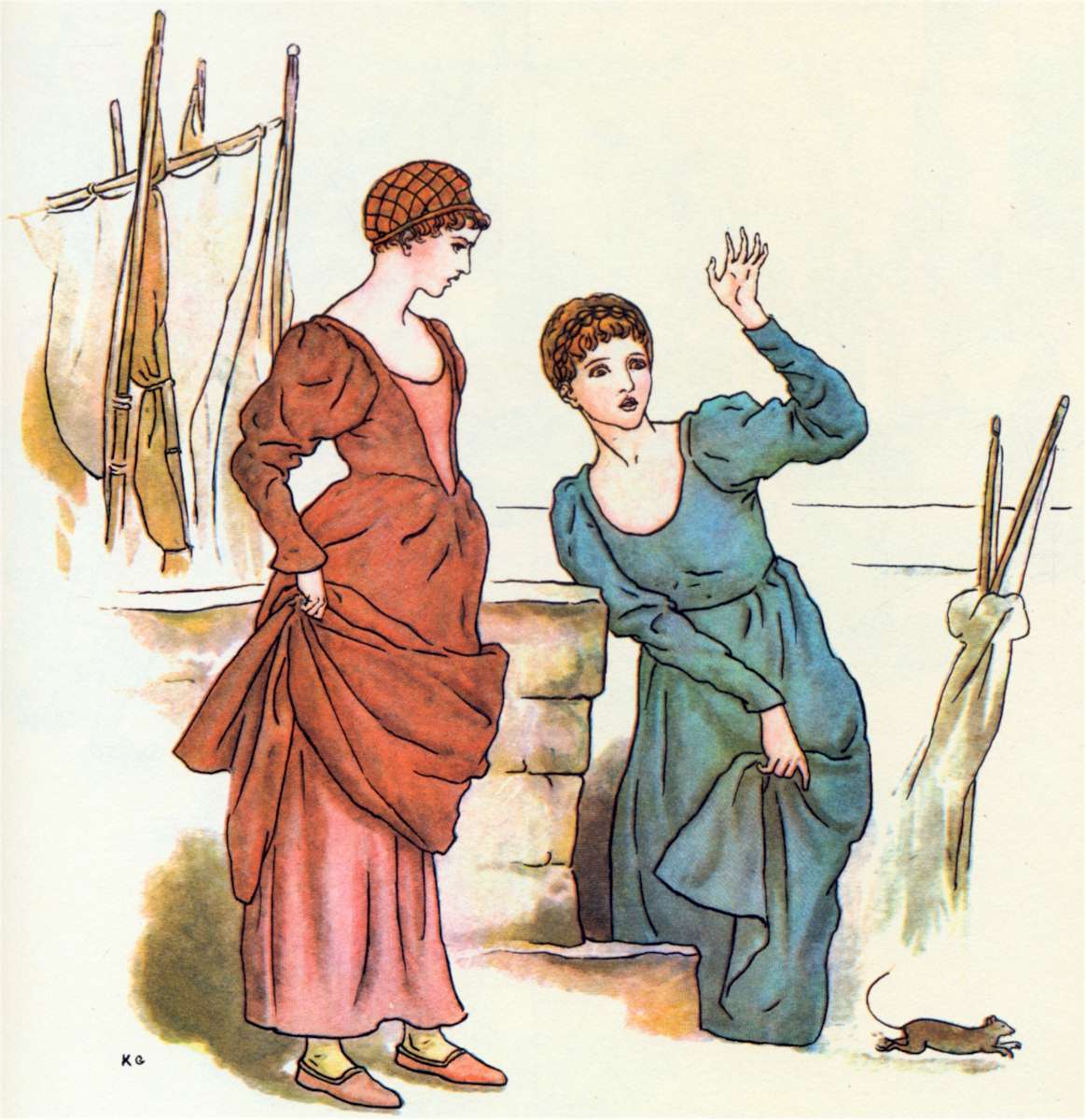
IV.
An hour they sate in council, At length the Mayor broke silence: “For a guilder I’d my ermine gown sell; I wish I were a mile hence! It’s easy to bid one rack one’s brain– I’m sure my poor head aches again, I’ve scratched it so, and all in vain Oh for a trap, a trap, a trap!” Just as he said this, what should hap At the chamber door but a gentle tap? “Bless us,” cried the Mayor, “what’s that?” (With the Corporation as he sat, Looking little though wondrous fat; Nor brighter was his eye, nor moister Than a too-long-opened oyster, Save when at noon his paunch grew mutinous For a plate of turtle green and glutinous) “Only a scraping of shoes on the mat? Anything like the sound of a rat Makes my heart go pit-a-pat!”
V.
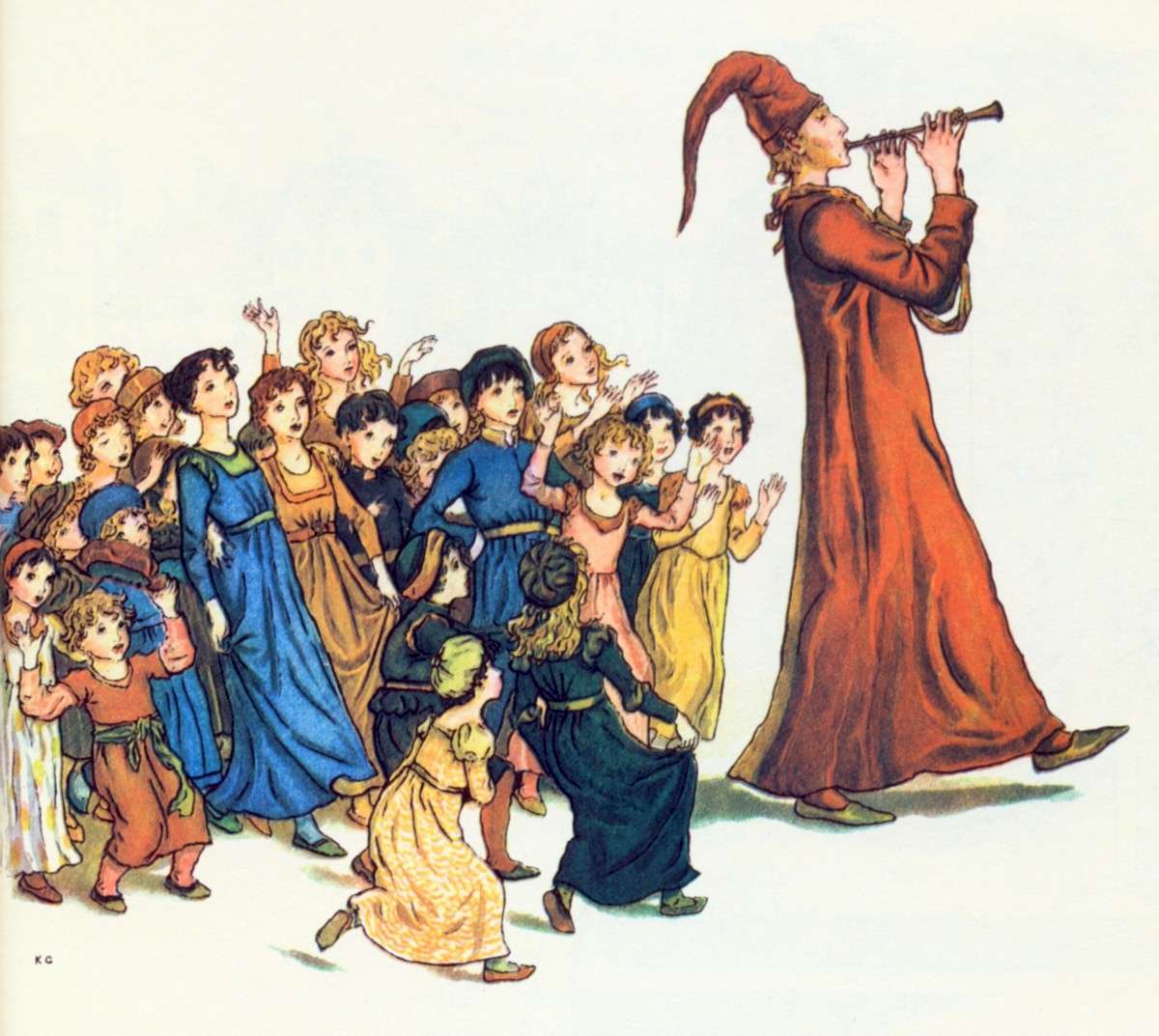
“Come in!”–the Mayor cried, looking bigger: And in did come the strangest figure! His queer long coat from heel to head Was half of yellow and half of red, And he himself was tall and thin, With sharp blue eyes, each like a pin, And light loose hair, yet swarthy skin No tuft on cheek nor beard on chin, But lips where smile went out and in; There was no guessing his kith and kin: And nobody could enough admire The tall man and his quaint attire. Quoth one: “It’s as my great-grandsire, Starting up at the Trump of Doom’s tone, Had walked this way from his painted tombstone!”
VI.
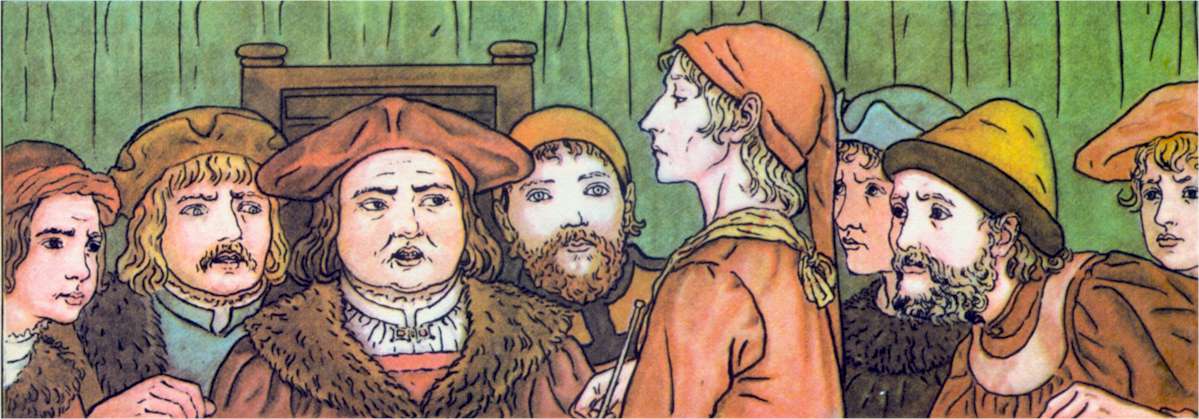
He advanced to the council-table: And, “Please your honours,” said he, “I’m able, By means of a secret charm, to draw All creatures living beneath the sun, That creep or swim or fly or run, After me so as you never saw! And I chiefly use my charm On creatures that do people harm, The mole and toad and newt and viper; And people call me the Pied Piper.” (And here they noticed round his neck A scarf of red and yellow stripe, To match with his coat of the self-same cheque; And at the scarf’s end hung a pipe; And his fingers they noticed were ever straying As if impatient to be playing Upon his pipe, as low it dangled Over his vesture so old-fangled.) “Yet,” said he, “poor Piper as I am, In Tartary I freed the Cham, Last June, from his huge swarms of gnats, I eased in Asia the Nizam Of a monstrous brood of vampire-bats: And as for what your brain bewilders, If I can rid your town of rats Will you give me a thousand guilders?” “One? fifty thousand!”–was the exclamation Of the astonished Mayor and Corporation. 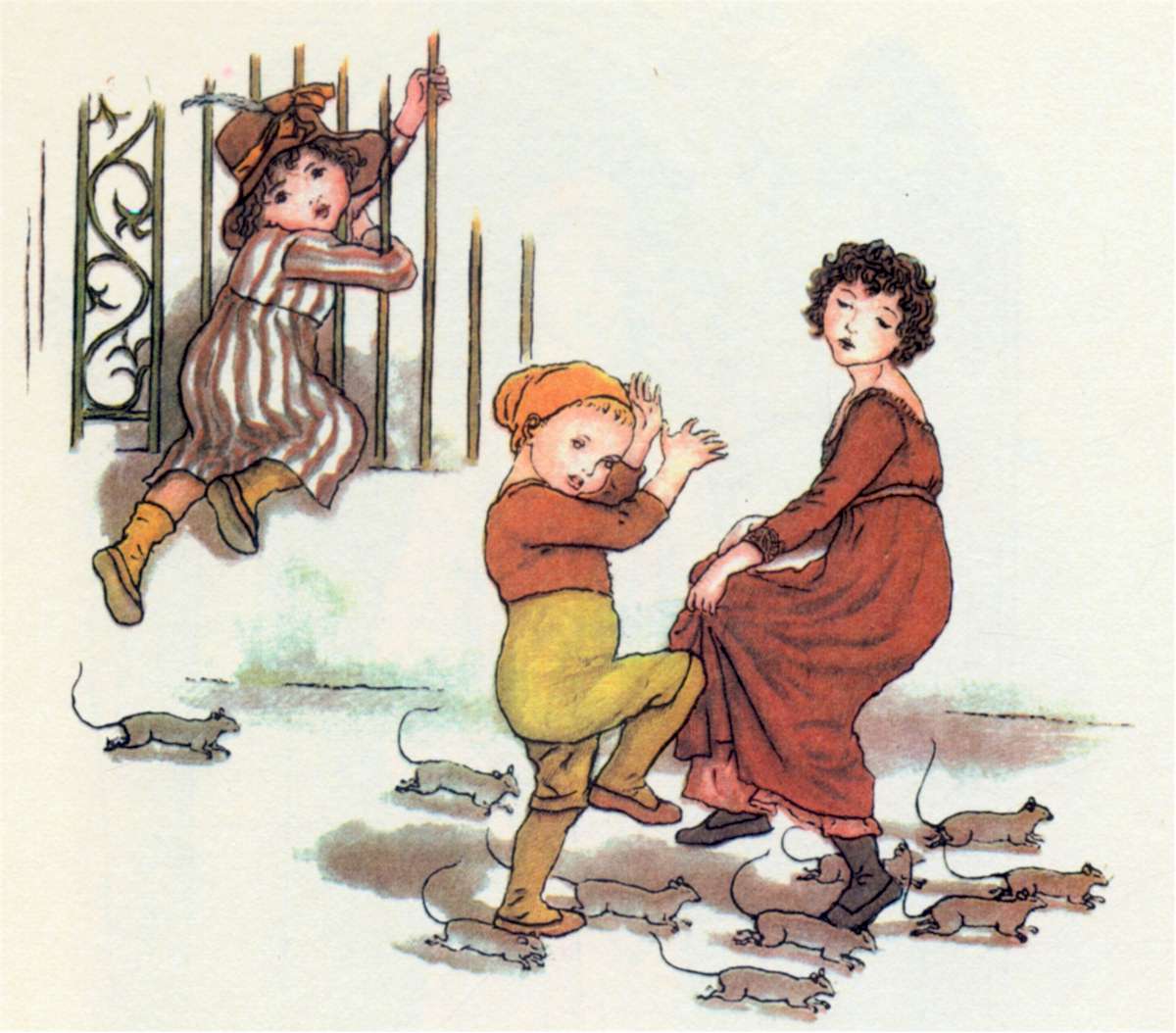
VII.
Into the street the Piper stept, Smiling first a little smile, 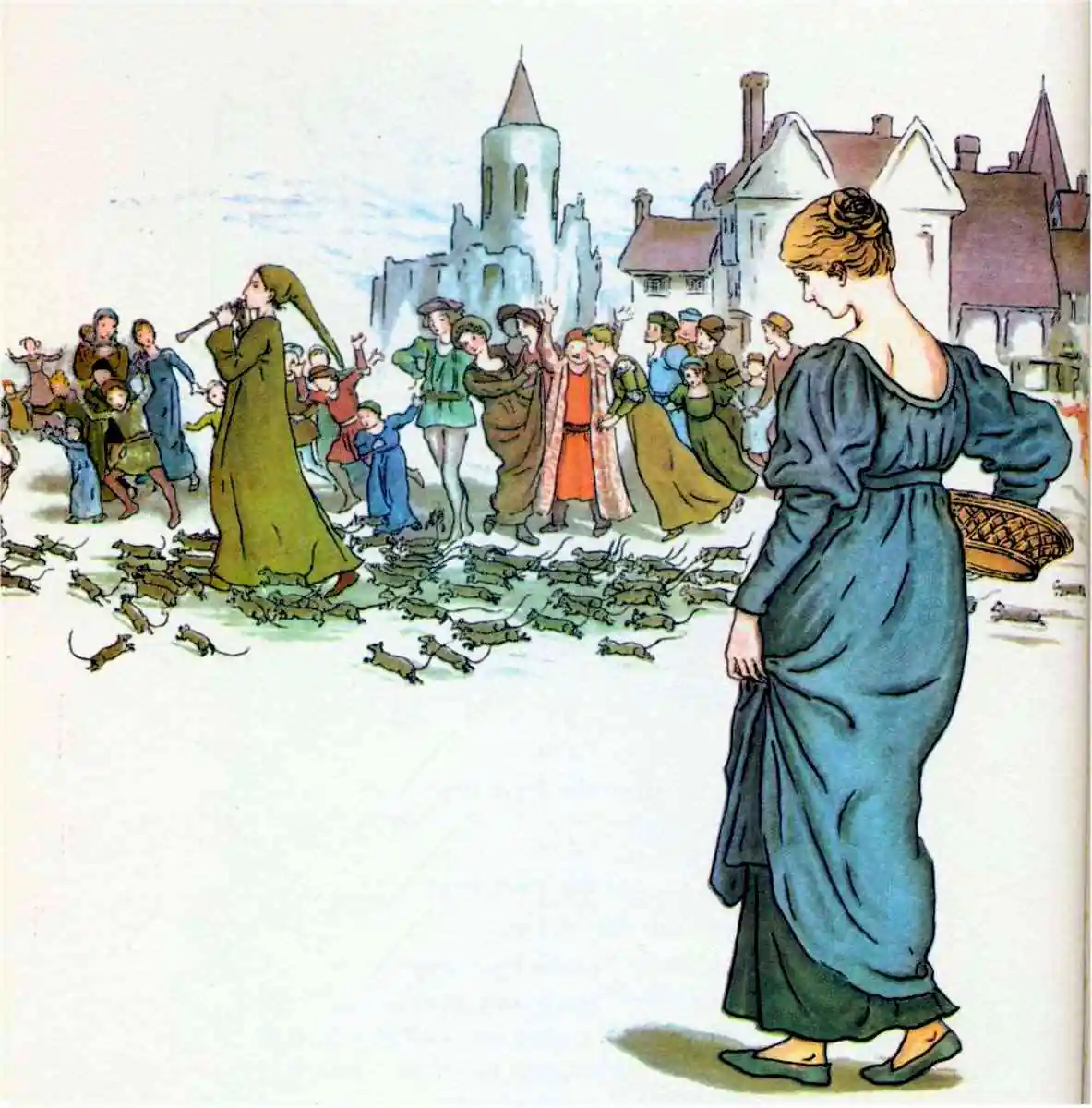

VIII.
You should have heard the Hamelin people Ringing the bells till they rocked the steeple “Go,” cried the Mayor, “and get long poles, Poke out the nests and block up the holes! Consult with carpenters and builders, And leave in our town not even a trace Of the rats!”–when suddenly up the face Of the Piper perked in the market-place, With a, “First, if you please, my thousand guilders!”
IX.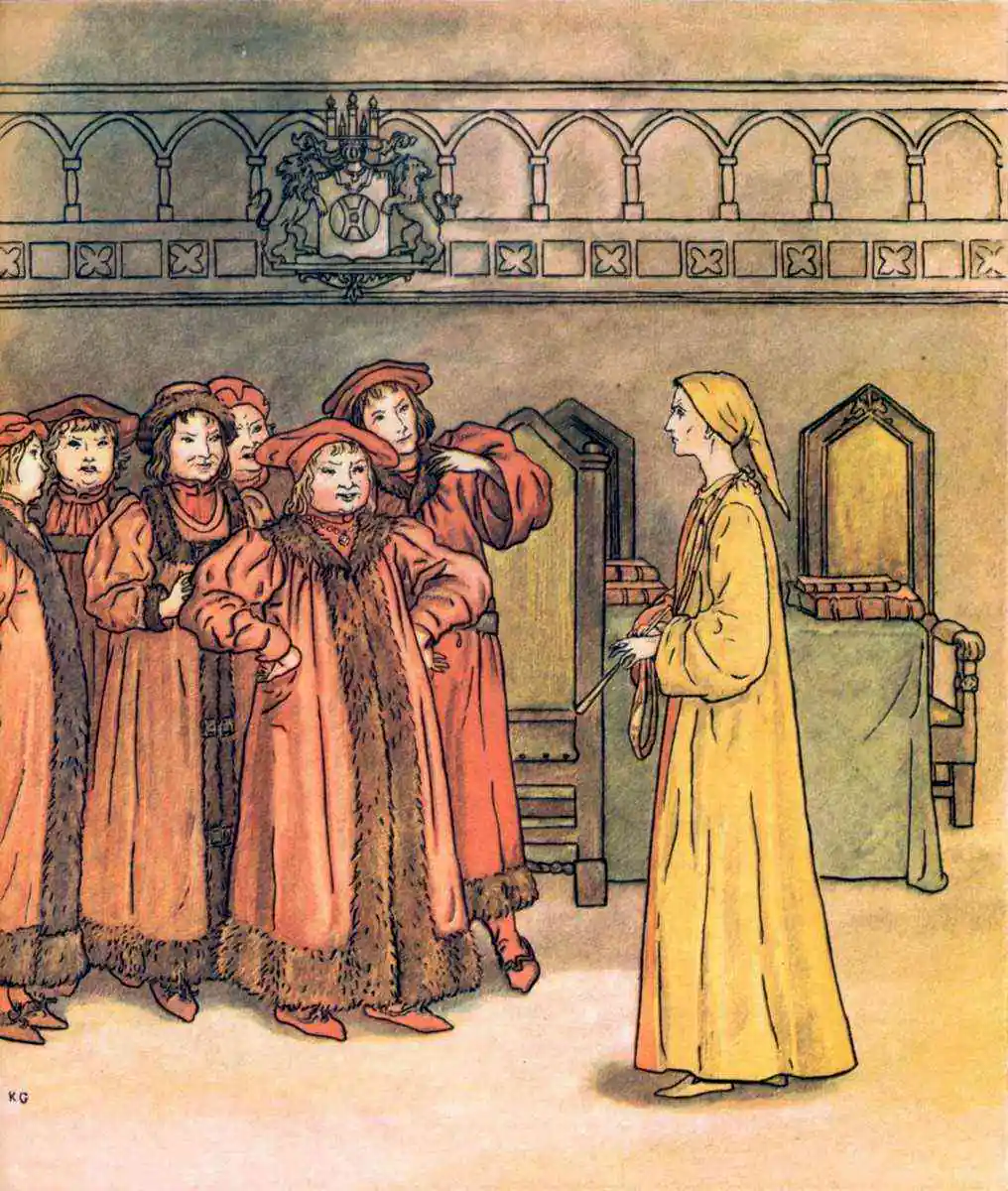
A thousand guilders! The Mayor looked blue; So did the Corporation too. For council dinners made rare havoc With Claret, Moselle, Vin-de-Grave, Hock; And half the money would replenish Their cellar’s biggest butt with Rhenish. To pay this sum to a wandering fellow With a gipsy coat of red and yellow! “Beside,” quoth the Mayor with a knowing wink, “Our business was done at the river’s brink; We saw with our eyes the vermin sink, And what’s dead can’t come to life, I think. So, friend, we’re not the folks to shrink From the duty of giving you something to drink, And a matter of money to put in your poke; But as for the guilders, what we spoke Of them, as you very well know, was in joke. Beside, our losses have made us thrifty. A thousand guilders! Come, take fifty!” 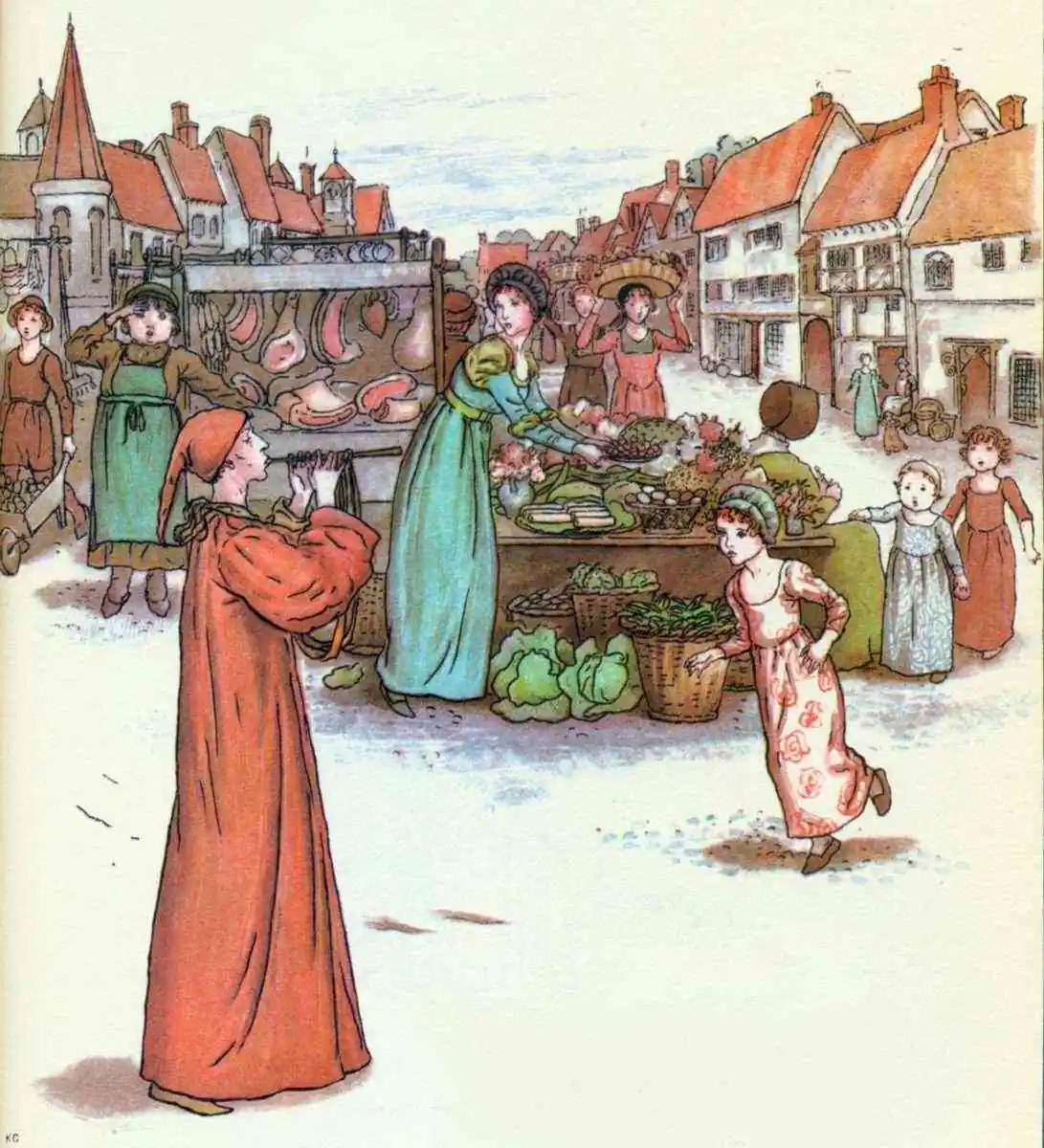
X.
The Piper’s face fell, and he cried, “No trifling! I can’t wait, beside! I’ve promised to visit by dinner-time Bagdad, and accept the prime Of the Head-Cook’s pottage, all he’s rich in, For having left, in the Caliph’s kitchen, Of a nest of scorpions no survivor: With him I proved no bargain-driver, With you, don’t think I’ll bate a stiver! And folks who put me in a passion May find me pipe after another fashion.”
XI.
“How?” cried the Mayor, “d’ ye think I brook Being worse treated than a Cook? Insulted by a lazy ribald With idle pipe and vesture piebald? You threaten us, fellow? Do your worst, Blow your pipe there till you burst!”
XII.
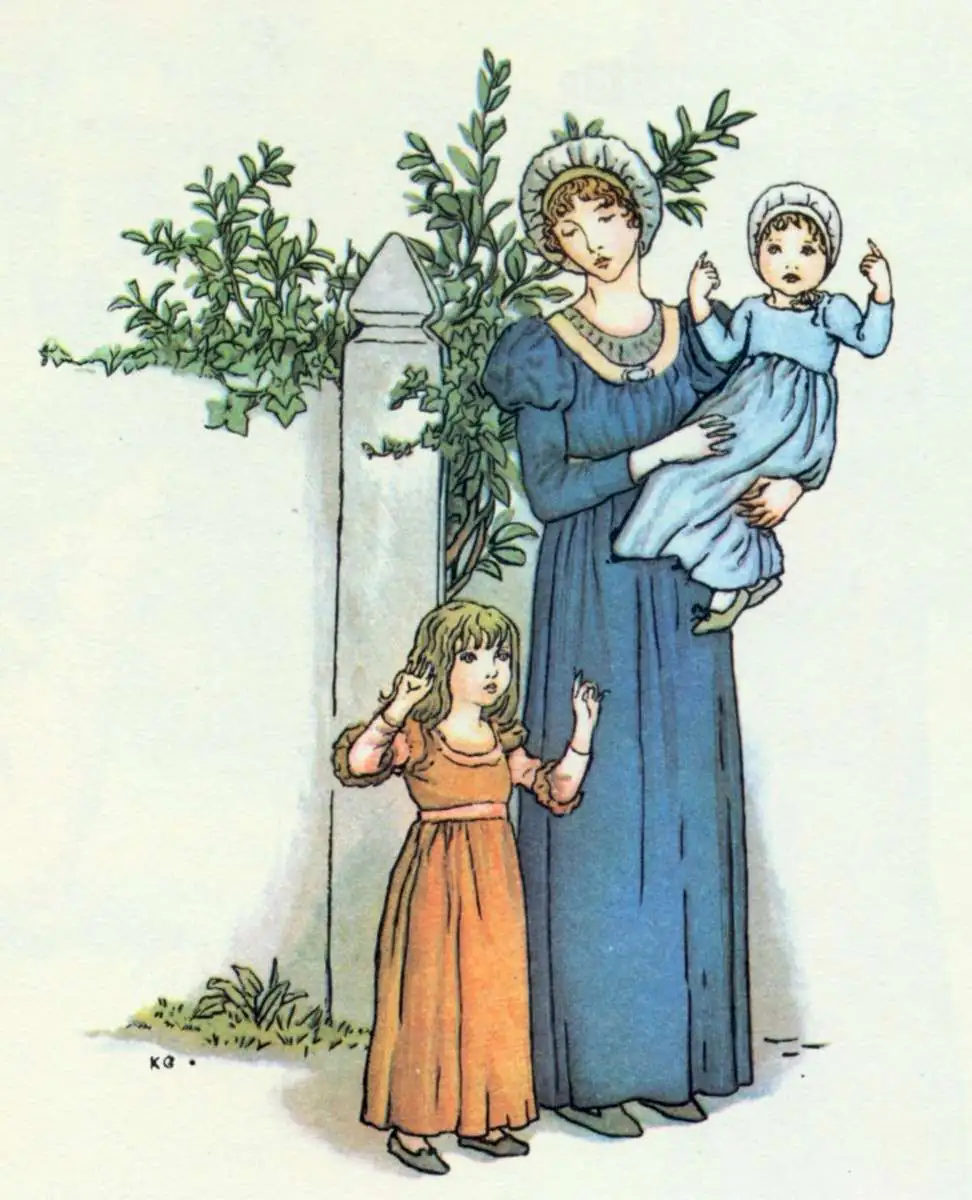
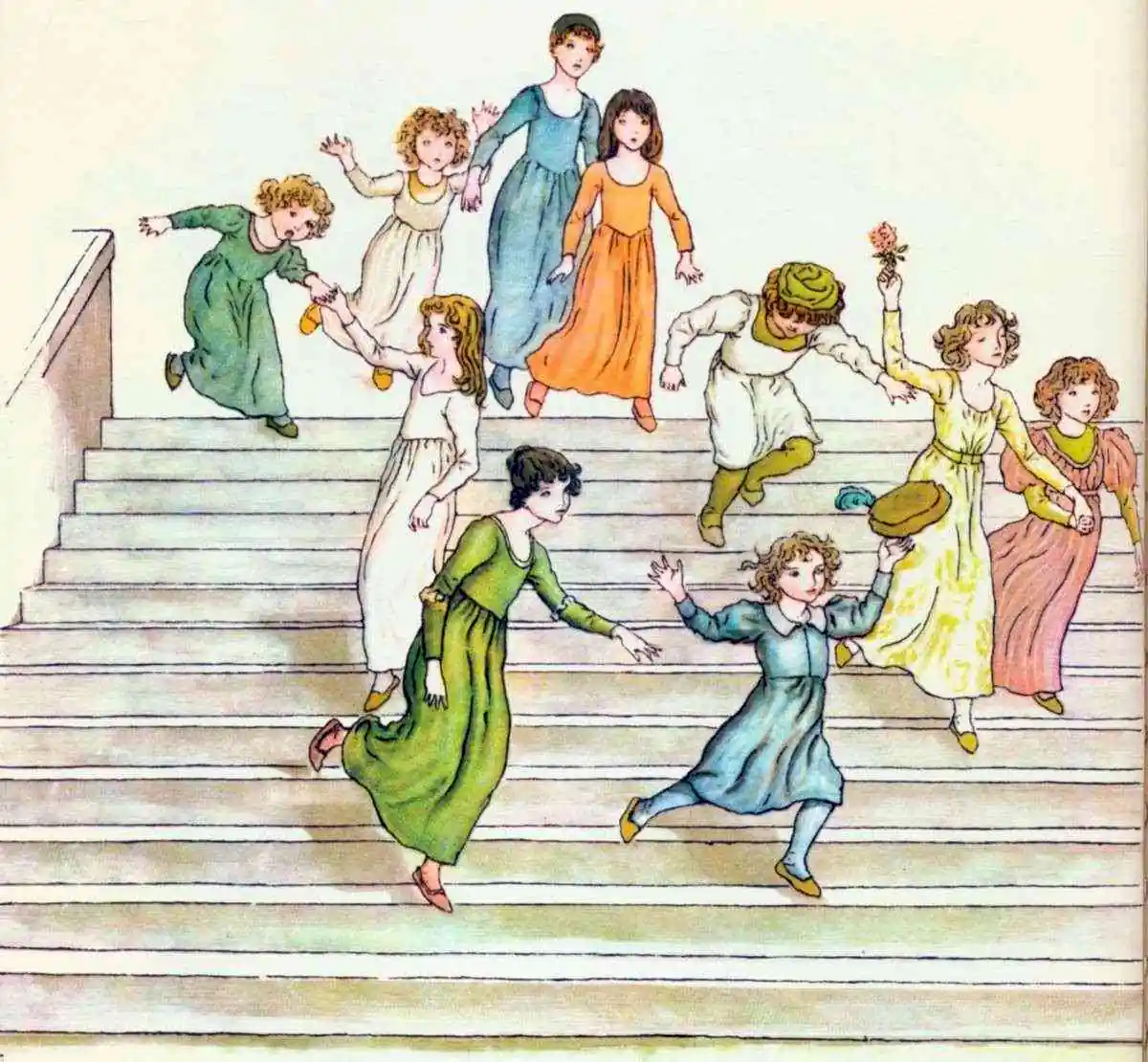
Once more he stept into the street, And to his lips again Laid his long pipe of smooth straight cane; And ere he blew three notes
(such sweet Soft notes as yet musician’s cunning 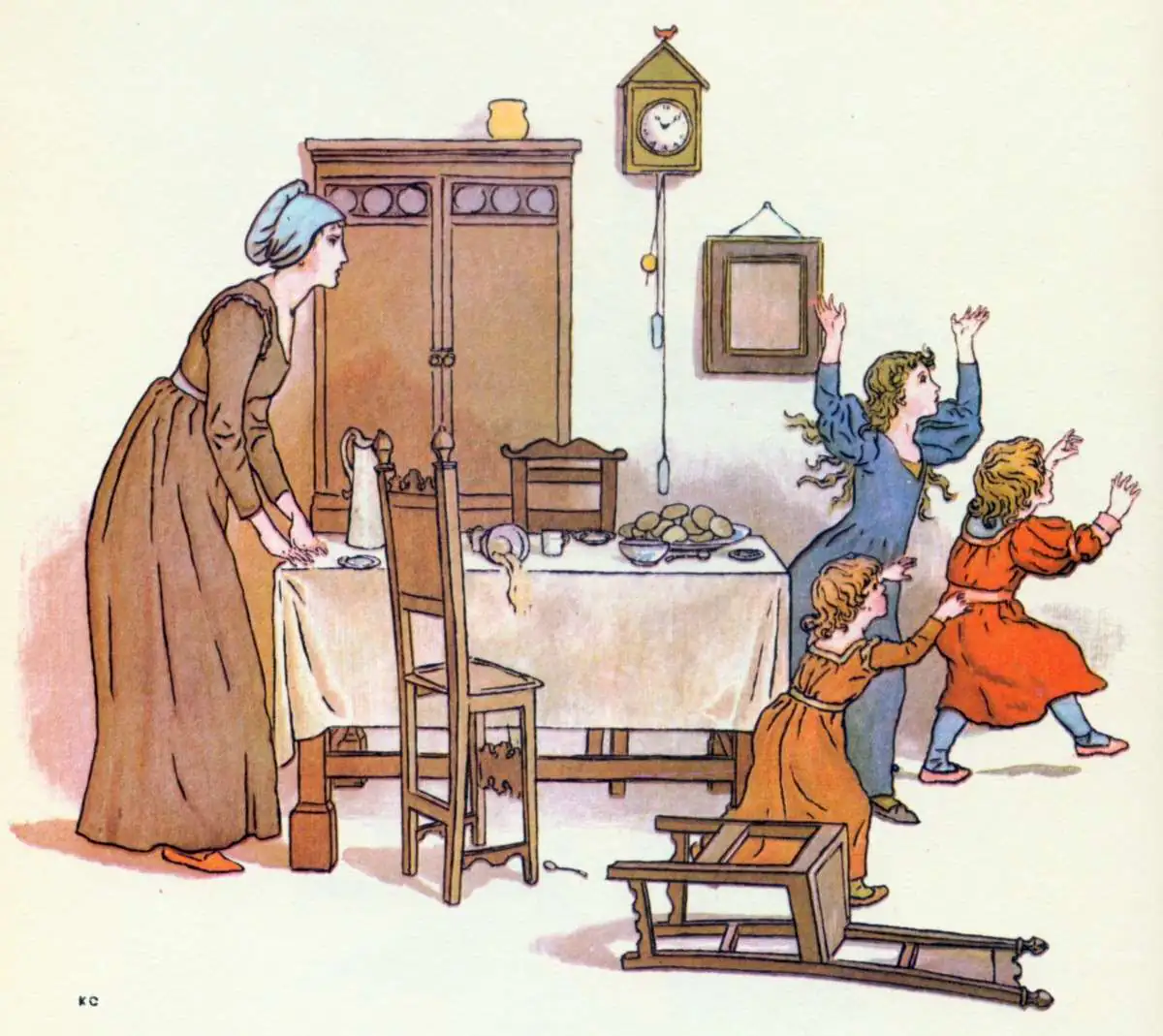
XIII.
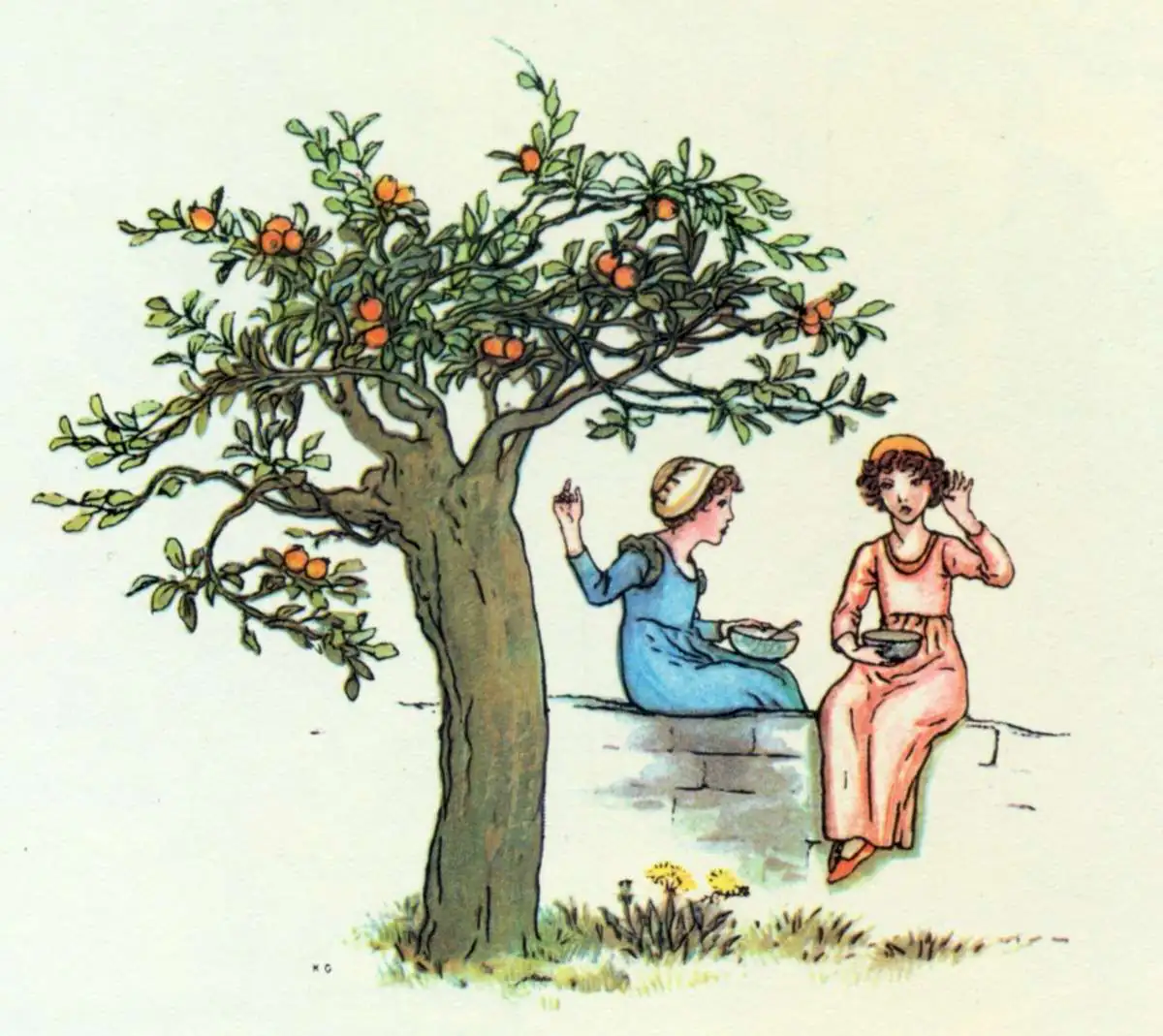
The Mayor was dumb, and the Council stood As if they were changed into blocks of wood, Unable to move a step, or cry 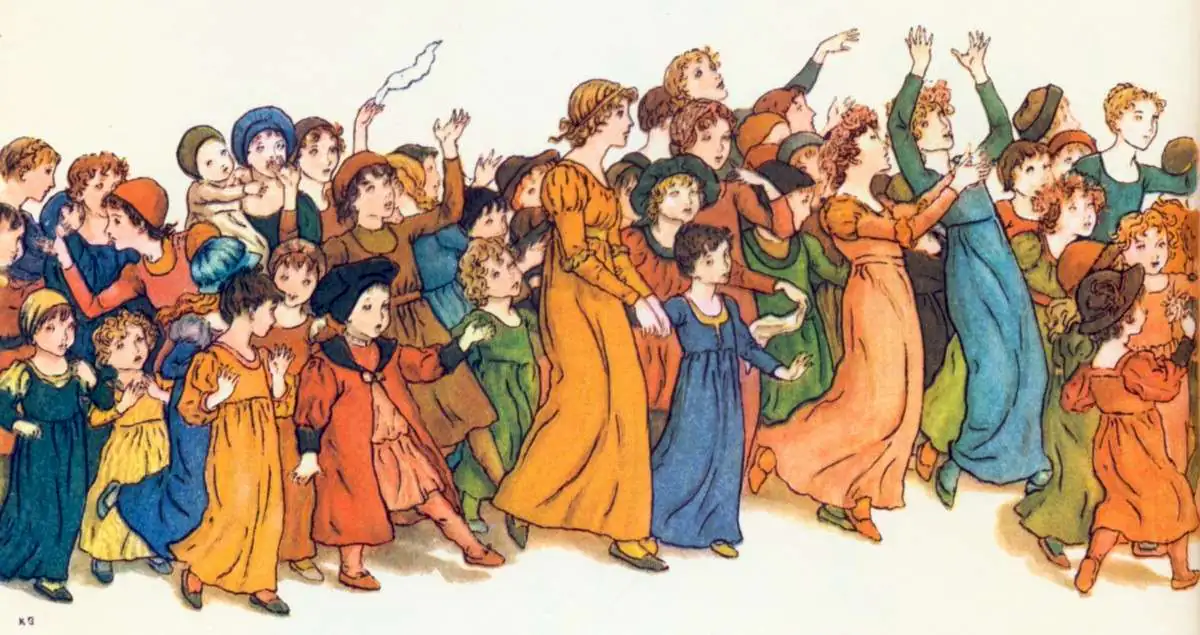
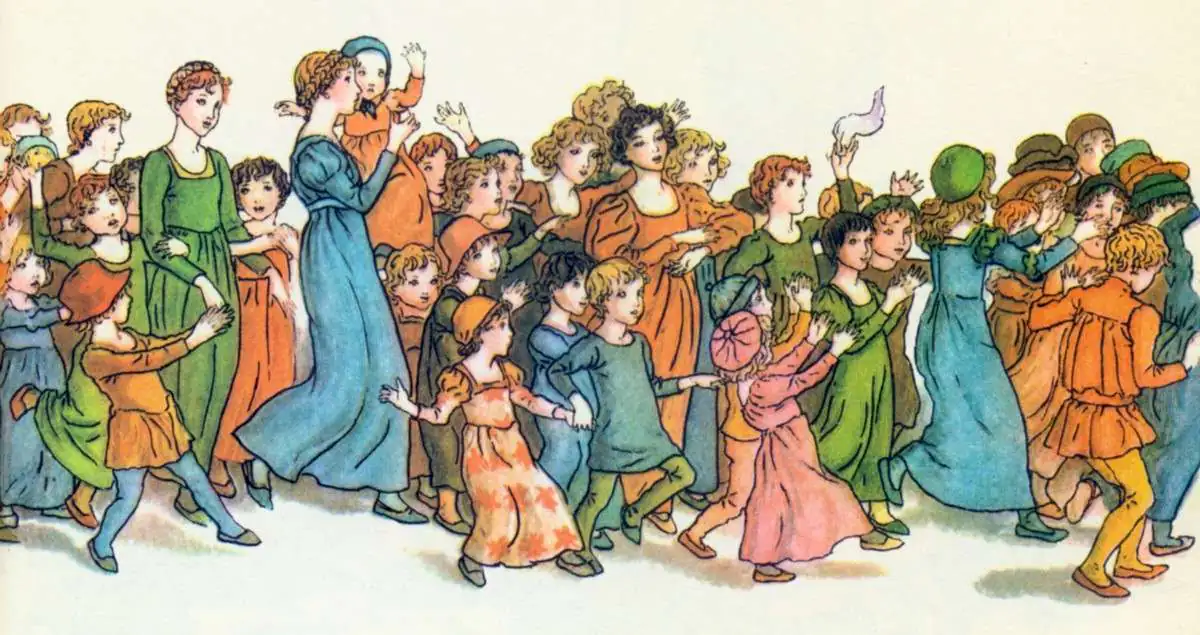
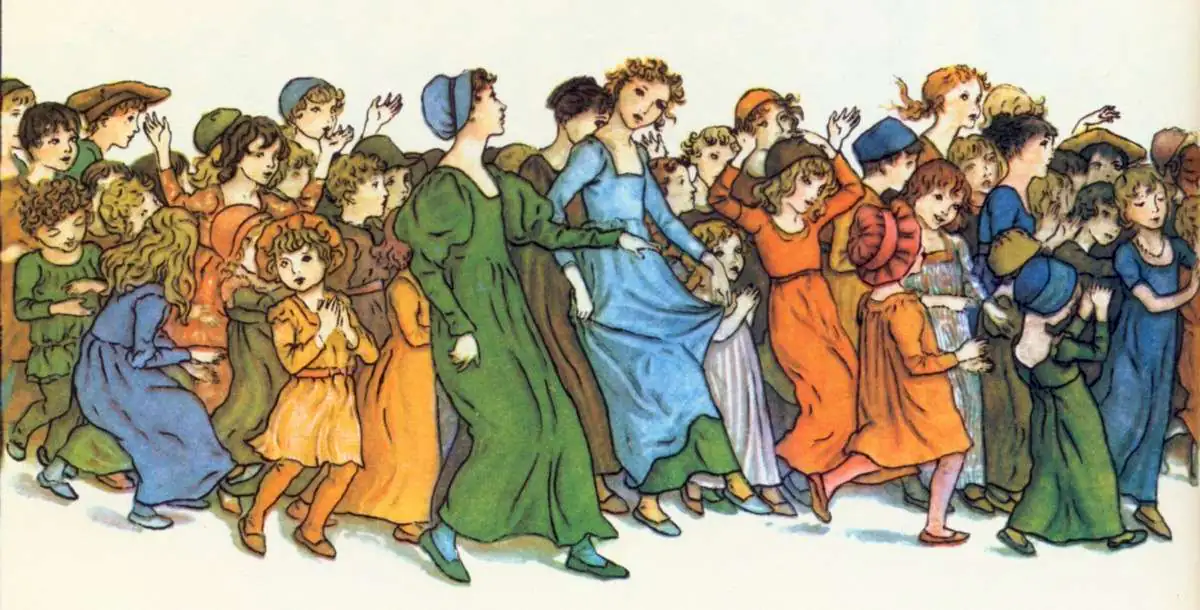
Alas, alas for Hamelin! There came into many a burgher’s pate A text which says that Heaven’s gate Opes to the rich at as easy rate As the needle’s eye takes a camel in! The Mayor sent East, West, North, and South, 
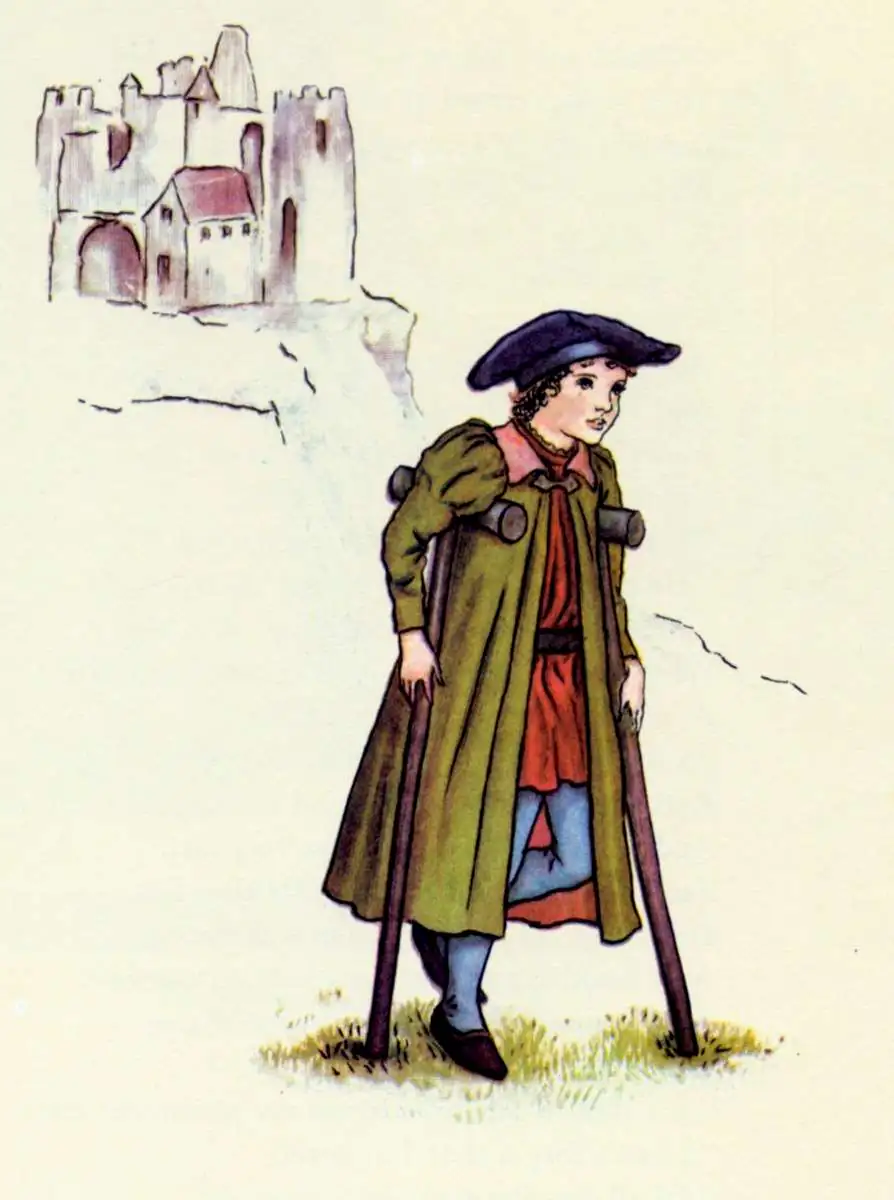
Thirteen hundred and seventy-six:” And the better in memory to fix The place of the children’s last retreat, They called it, the Pied Piper’s Street– Where any one playing on pipe or tabor, Was sure for the future to lose his labour. Nor suffered they hostelry or tavern To shock with mirth a street so solemn; But opposite the place of the cavern They wrote the story on a column, And on the great church-window painted The same, to make the world acquainted How their children were stolen away, And there it stands to this very day. And I must not omit to say That in Transylvania there’s a tribe Of alien people that ascribe The outlandish ways and dress On which their neighbours lay such stress, To their fathers and mothers having risen Out of some subterraneous prison Into which they were trepanned Long time ago in a mighty band Out of Hamelin town in Brunswick land, But how or why, they don’t understand. 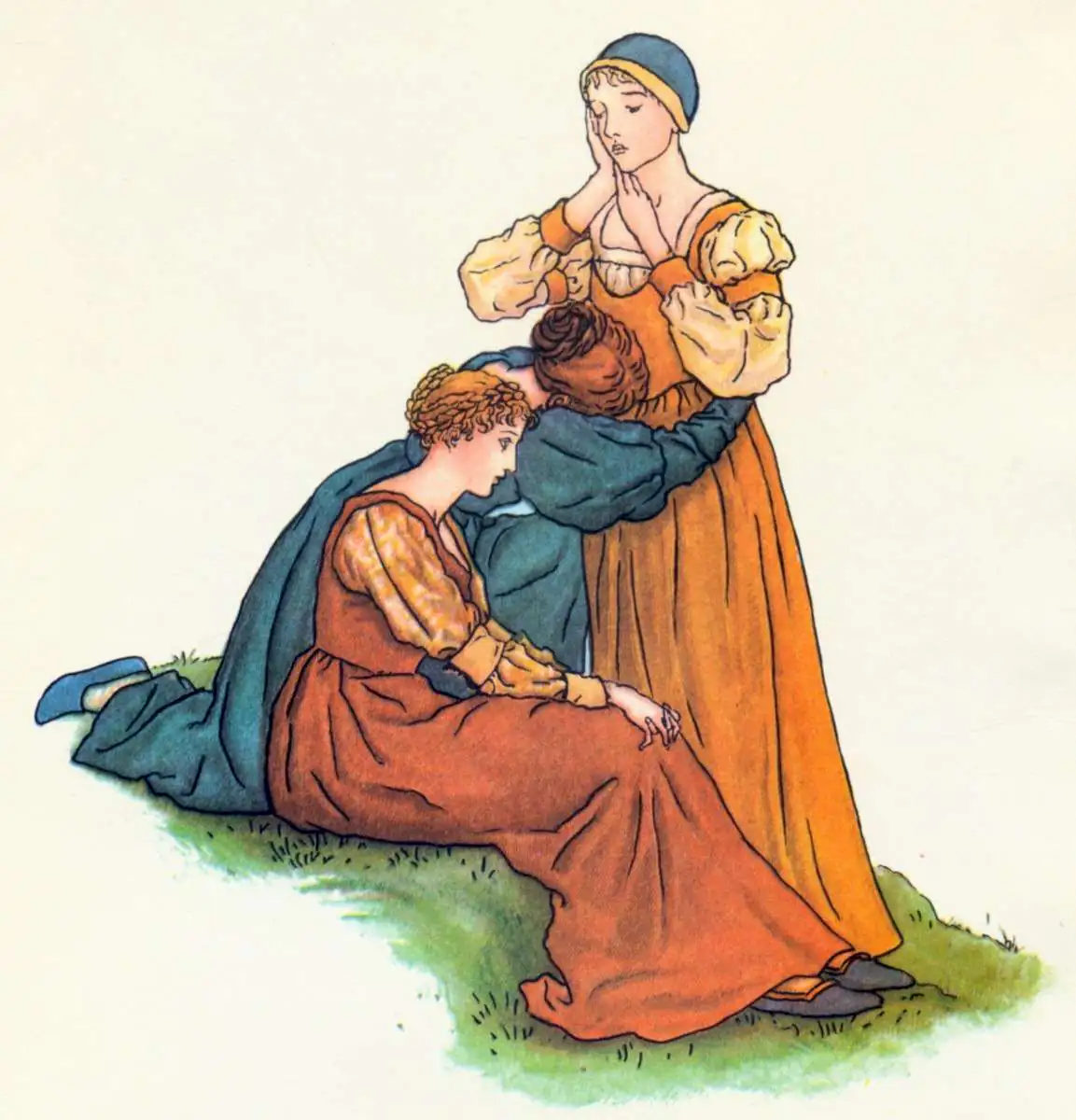
XV.
So, Willy, let me and you be wipers Of scores out with all men–especially pipers! And, whether they pipe us free from rats or from mice, If we’ve promised them aught, let us keep our promise!